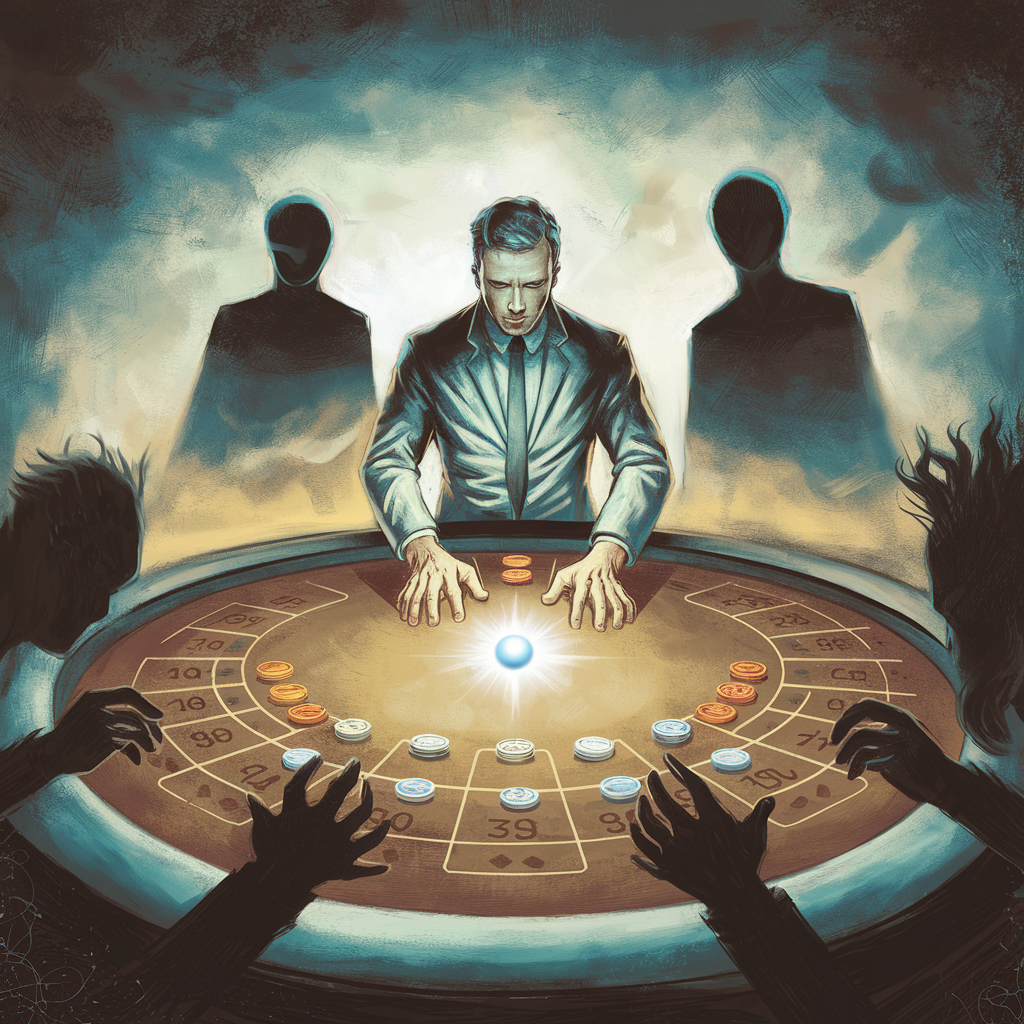

Happiness is a state. It should be unconditional, meaning without conditions. When the word “if” appears, it creates conditional happiness. For example: “If the weather is sunny, I will be happy,” or “If I have a Swiss bank account, I will be happy.” This kind of conditional happiness inevitably leads to suffering and disappointment. Even if we get what we want, we develop a fear of losing it, and when we lose it, we experience suffering. Furthermore, we may not get what we want at all, which will also lead to suffering. Sages say that material happiness now is the seed of future unhappiness. What we need is spiritual, transcendent and therefore permanent happiness.
Therefore, we need to be mindful of when we use the word “if.” By applying this word, we turn our life into a game of chance. Think of it like a casino, where we bet on red (condition fulfilled) or black (condition unfulfilled) and await the outcome.
In my opinion, this approach to life violates the prohibition against gambling, as seen in the Vedic tradition of Gaudiya Vaishnavism. But not only in the Vedas; there is a prohibition against gambling in other spiritual traditions as well.
This prohibitive principle is most clearly seen as the injunction to avoid gambling, but it can also be applied allegorically to our lives. Yes, our whole life is a game, but it doesn’t have to be a gamble.
So, friends, in my subjective author’s opinion, every time we put a condition on a future outcome that does not depend on us, we are gambling. Our happiness is at stake in this game. The paradox is that we already have happiness, as it always exists in the present moment, but we take it away from ourselves and put it on the table as a bet for a future result.
Friends, remember, wishing for something in the future emphasizes the incompleteness of the present moment, devaluing it. But it is the only real moment, and therefore it can never be incomplete.


Leave a Reply